Obsessive-compulsive disorder is far more than a preference for neatness or a habit of double-checking. It is a relentless cycle of intrusive thoughts and the urgent behaviors people use to quiet them – a cycle that can consume hours of the day and quietly take over a life. If unwanted thoughts and the rituals meant to relieve them are running your days, you are not alone, and OCD is highly treatable with the right care.
Santa Clara Mental Health provides specialized OCD treatment for adults throughout the Bay Area. Our licensed psychiatrists and therapists use clinically proven, evidence-based methods tailored to your specific symptoms, triggers, and goals – not a generic approach applied to a deeply individual experience. Whether your OCD is mild and manageable or severe and disabling, we offer personalized treatment options designed to meet you exactly where you are, including same-day admissions when you need immediate support.
Reach out to Santa Clara Mental Health today at (408) 741-9292 or contact our team to speak with a specialist and take the first step toward relief.
Obsessive-compulsive disorder is a mental health condition defined by two core features: obsessions and compulsions. Obsessions are unwanted, intrusive thoughts, images, or urges that trigger intense anxiety or distress. Compulsions are the repetitive behaviors or mental acts a person feels driven to perform in order to neutralize that distress. OCD affects millions of adults in the United States and can begin at any age, though it often emerges in adolescence or early adulthood.
What makes OCD so difficult is the way the cycle reinforces itself. An intrusive thought sparks anxiety, a compulsion provides momentary relief, and that relief teaches the brain to repeat the ritual the next time the thought returns. Over time, the compulsions grow more frequent and more demanding while the relief they offer grows shorter. People with OCD are often acutely aware that their fears are excessive or irrational, yet feel powerless to stop – which can bring deep frustration and shame.
At Santa Clara Mental Health, we treat OCD as a whole-person condition. Effective care does more than target individual symptoms – it addresses the anxiety, beliefs, and behavioral patterns that sustain the cycle, while supporting the physical and emotional well-being that lasting recovery depends on.
OCD does not look the same in everyone. It tends to organize around particular themes, and most people experience one or more of the following presentations. Our clinical team is experienced in recognizing and treating the full range of OCD subtypes.
One of the most recognized forms of OCD centers on fears of germs, illness, dirt, or contamination. These obsessions drive compulsive washing, cleaning, sanitizing, or avoidance of places and objects perceived as unclean. The behaviors can become so extensive that they interfere with work, relationships, and basic daily routines.
Checking compulsions are driven by a fear that something terrible will happen if a task is left undone – an unlocked door, an unplugged appliance, an unintended mistake that could harm someone. People may check locks, switches, or their own actions repeatedly, often retracing their steps in search of a reassurance that never fully satisfies the underlying fear.
For some individuals, OCD revolves around a powerful need for symmetry, order, or a sense that something is “just right.” Items must be arranged precisely, actions repeated until they feel complete, or routines performed in an exact sequence. When the feeling of rightness does not come, the resulting distress can be intense and consuming.
Not all OCD is visible. Many people experience distressing intrusive thoughts – often violent, taboo, or morally charged – that conflict sharply with their values, alongside mental rituals such as silent counting, praying, reviewing, or reassurance-seeking. Because these compulsions are internal, this form of OCD is frequently misunderstood and can go undiagnosed for years, despite being just as treatable.
OCD often appears alongside other conditions, including anxiety, depression, PTSD, and eating disorders, each of which can complicate the picture and intensify symptoms. At Santa Clara Mental Health, our intake assessments screen for co-occurring conditions so your treatment plan addresses the full scope of your mental health rather than a single piece of it.
OCD symptoms generally fall into two connected categories – obsessions and compulsions – that feed one another in a self-reinforcing loop. Recognizing the pattern is an important first step toward getting help.
Effective OCD treatment requires more than insight or willpower – it requires breaking the cycle that keeps obsessions and compulsions locked together. At Santa Clara Mental Health, every plan begins with a thorough clinical assessment of your symptoms, history, co-occurring conditions, and goals. The modalities your team draws from all fall under Evidence-Based Therapy, validated through clinical research and proven effective for OCD.
Exposure and Response Prevention is the most effective and extensively researched treatment for OCD, and the cornerstone of our approach. A specialized form of cognitive behavioral therapy, ERP gradually and safely exposes you to the thoughts and situations that trigger your obsessions while supporting you in resisting the compulsions that normally follow. Over time, your brain learns that the feared outcome does not occur and that anxiety fades on its own – weakening the cycle until the obsessions lose their grip.
Acceptance and Commitment Therapy complements ERP by changing your relationship with intrusive thoughts rather than fighting them. Through mindfulness and values-based action, ACT helps you let distressing thoughts come and go without responding to them as commands – freeing your energy to move toward what matters to you instead of toward the next compulsion.
For individuals whose OCD comes with overwhelming emotions or co-occurring difficulties, Dialectical Behavior Therapy offers practical, in-the-moment skills. DBT builds mindfulness, distress tolerance, emotion regulation, and interpersonal effectiveness – tools that help you sit with discomfort and resist compulsions without becoming flooded.
Mindfulness-Based Stress Reduction uses meditation and present-moment awareness to lower the overall anxiety that fuels OCD. By learning to observe thoughts and sensations without judgment or reaction, you build the capacity to notice an intrusive thought and let it pass rather than feeding it with a ritual.
When appropriate, our board-certified psychiatrists may recommend medication as part of your treatment plan. Certain medications can reduce the intensity of obsessions and compulsions enough to make therapeutic work more effective, and they are often most powerful when combined with ERP. All medication decisions are made collaboratively, with careful monitoring and adjustment over time.
Recovery from OCD looks different for every person, and the right level of care depends on the severity of your symptoms, how much they interfere with daily life, and your treatment history. Santa Clara Mental Health offers multiple levels of care, so you receive the right intensity of support.

Our residential treatment program provides 24/7 structured support in a comfortable, pet-friendly Santa Clara facility. This level of care suits individuals with severe OCD, symptoms that have not responded to outpatient treatment, or co-occurring conditions that call for a safe, stabilizing environment. Residential clients take part in daily individual therapy, structured exposure work, group sessions, psychiatric care, and holistic wellness programming.

Our Virtual IOP offers structured therapeutic programming you can access from anywhere in California. It is well-suited to individuals who need more support than weekly therapy but do not require residential placement, combining multiple weekly sessions of skills-based education, exposure practice, and individual check-ins – all without stepping away from work, school, or family.

Recovery continues after a program ends. Our aftercare and discharge planning team works with every client to build a long-term plan that includes follow-up appointments, relapse-prevention strategies, community resources, and ongoing support to protect the progress you have made.
Our clinicians are trained in ERP and other proven OCD treatments – the specialized care this condition requires, rather than general therapy applied broadly.
Treatment is built around the methods research shows actually work for OCD, so your time is spent on care that produces measurable change.
No two presentations of OCD are alike. Your plan is built around your specific obsessions, compulsions, co-occurring conditions, and goals.
On-site psychiatrists coordinate medication management alongside your therapy when needed, giving you a single, comprehensive treatment experience.
From residential treatment to Virtual IOP and aftercare planning, you can step into the intensity of care you need now and adjust as you progress.
Located in Santa Clara with easy access from San Jose, Sunnyvale, Palo Alto, Mountain View, and Milpitas – close enough to stay connected to your community while focusing on recovery.
Reaching out for help with OCD can feel daunting, particularly when shame or secrecy has surrounded your symptoms. Knowing what to expect can make that first step easier.
Your treatment begins with a comprehensive, compassionate intake assessment. A licensed clinician will review your obsessions, compulsions, history, and how your symptoms affect your daily life – without judgment, and at a pace that respects your comfort. If screening reveals a co-occurring condition such as anxiety, depression, or an eating disorder, your plan will be designed to address these factors together.
From there, you and your treatment team set clear, meaningful goals – whether that means cutting the hours lost to rituals, facing a long-avoided situation, or reclaiming your time and freedom. Because exposure work asks you to approach what you fear, your clinician builds a foundation of trust first and moves at a pace you help set, so each step feels challenging but manageable.
Your care team monitors your progress closely, adjusts your plan as needed, and helps you build skills that last well beyond discharge. With your consent, our family therapy program can involve loved ones in the process – helping them understand OCD and learn how to support your recovery without unintentionally reinforcing compulsions.
Life in the Bay Area moves fast, and the region’s high-pressure, high-achievement culture can make OCD even harder to manage. Demanding workloads, long hours, and the constant drive to perform can intensify anxiety and leave little room to address a condition that already demands so much time and energy. Many adults hide their symptoms for years, fearing that admitting to intrusive thoughts or rituals will be misunderstood.
OCD does not improve by being concealed, and it rarely resolves on its own. At Santa Clara Mental Health, we work with professionals, students, parents, and people from every walk of Bay Area life who are ready to break the cycle and reclaim their time. Having OCD is not a character flaw, and seeking treatment is a sign of strength.
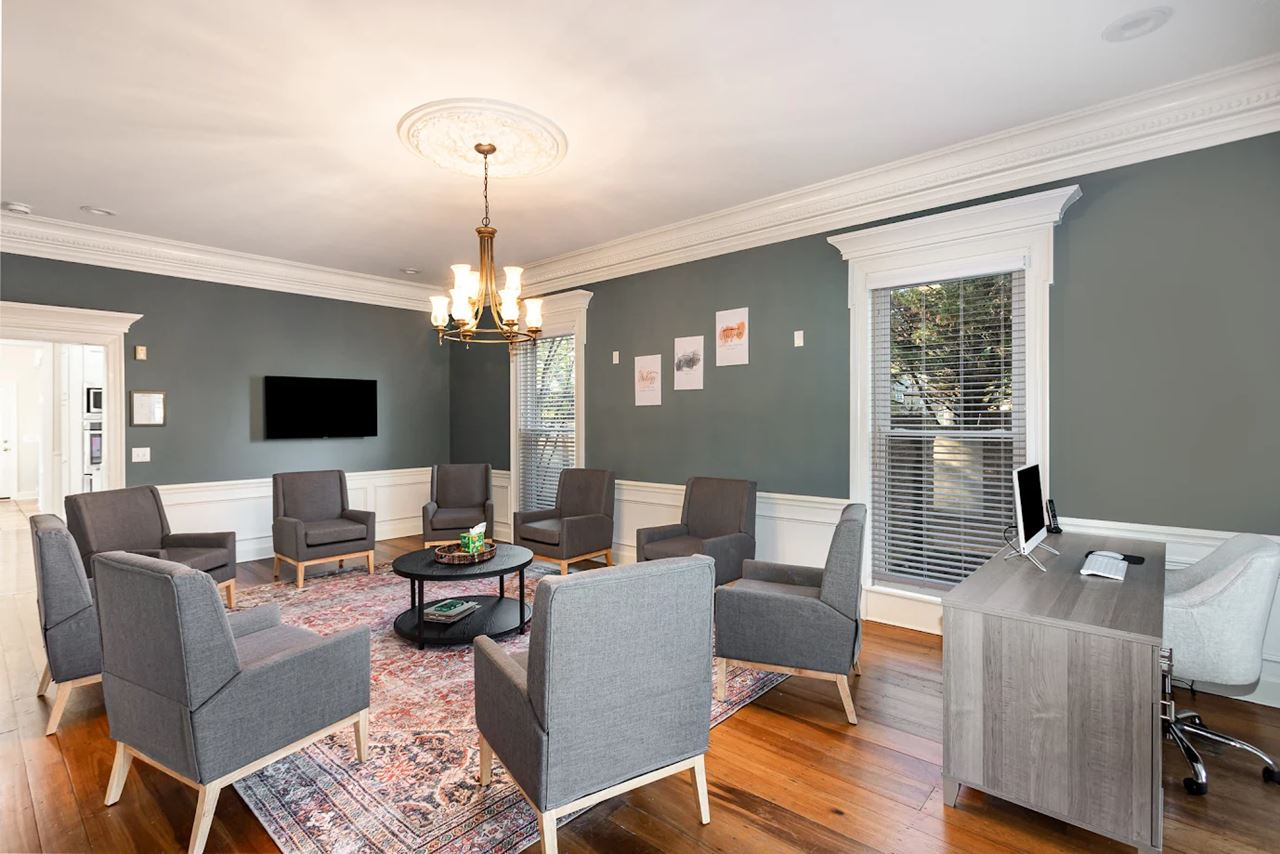
Our facility is located in Santa Clara with convenient access from throughout the South Bay, Peninsula, and greater Bay Area. Whether you choose residential treatment or our Virtual IOP, you do not have to put your entire life on hold to get the help you need. You are welcome to tour our facility and meet our clinical team before deciding what is right for you.
Getting started with OCD treatment at Santa Clara Mental Health is straightforward and pressure-free. When you call (408) 741-9292 or contact our team, you will speak directly with a member of our admissions team who will listen, answer your questions, and guide you through the next steps at your own pace. There is no obligation and no judgment – just a confidential conversation about what you are experiencing and how we can help. From helping you verify your insurance to scheduling your first assessment, our team handles the details so you can focus on what matters most: your recovery.
Our admissions team is ready to walk you through your options and help you get started as soon as today.
Exposure and Response Prevention (ERP), a specialized form of cognitive behavioral therapy, is widely considered the most effective treatment for OCD. It is the cornerstone of our approach and is often combined with other evidence-based therapies and, when appropriate, medication to give you the strongest foundation for recovery.
The length of treatment depends on the severity of your symptoms and your individual progress. Some clients benefit from a focused residential stay of several weeks, while others make strong progress through our Virtual IOP over a longer period. Your treatment team will help determine the right timeline and adjust as needed.
Yes. Santa Clara Mental Health works with most major insurance providers in California. You can verify your insurance to check your coverage quickly and confidentially, or call (408) 741-9292 and our admissions team will confirm your benefits for you.
No. Intrusive thoughts are a hallmark symptom of OCD, and they are distressing precisely because they conflict with your values – not because you want to act on them. Effective treatment helps you respond to these thoughts differently so they lose their power, rather than treating them as threats to fear.
Our Virtual IOP is designed for individuals who need to maintain work, school, or family responsibilities while receiving structured OCD treatment. Residential care is also available for those who need a more immersive level of support before returning to daily life.
Yes. Santa Clara Mental Health is a pet-friendly facility. We recognize the comfort and emotional grounding that animals can provide, and we welcome them as part of your recovery experience.
By using this Website, you agree to our Privacy Policy and Terms of Use. We use cookies and similar technologies, including pixels and web beacons, for analytics and advertising. Some of our providers may receive information collected through these technologies and use it in accordance with their own privacy policies. Select “Preferences” to customize your choices, “Accept” to allow all cookies and similar technologies, or “Decline” to allow only those necessary to operate the Website. You can change your choices at any time.